
Words can’t describe how incredible the site of Machu Picchu is so I’ll just start this post with a few pictures of the landscape and the wildflowers around Machu Picchu that will hopefully put the rest in context.


Advanced Architecture has stood the test of time.
Look at how the triangular stone gables on the homes mirror the peaks of the mountains. How the agricultural terraces follow the natural curves of the mountain slopes – like an organic extension of the surrounding ridges. And how the doors and window taper in towards the top – just like the volcanic peaks they overlook. If you look closely at the stone walls you’ll see that the massive granite blocks have been cut to fit snugly up against each other . There’s no mortar yet you couldn’t fit a card in between the rocks! This amazing architectural feat is called ashlar masonry, and has allowed these structures to survive centuries of earthquakes.


Machu Picchu was built as the seat of the Inca Empire around 1450. It was strategically positioned between several sacred mountains with uninterrupted views of sunrise and sunset. We were lucky enough to walk in through the sun gate at sunrise, after 4 incredible days hiking along the Inca Trail and saw the sun rising up over the ridge to illuminate this incredibly complex and clever UNESCO site. The best thing about seeing Machu Picchu at this early hour is that no other tourists are present (except those that have hiked in on the trails) so you get a few hours to walk around an almost empty site before the crowds pour in. We were able to sit quietly on the terraces and marvel at the magnificent feats of architectural genius and admire the agricultural terraces that kept the population (which was up to 1,000 people) housed and fed in the 1500’s.


The Incredible Inca Trail
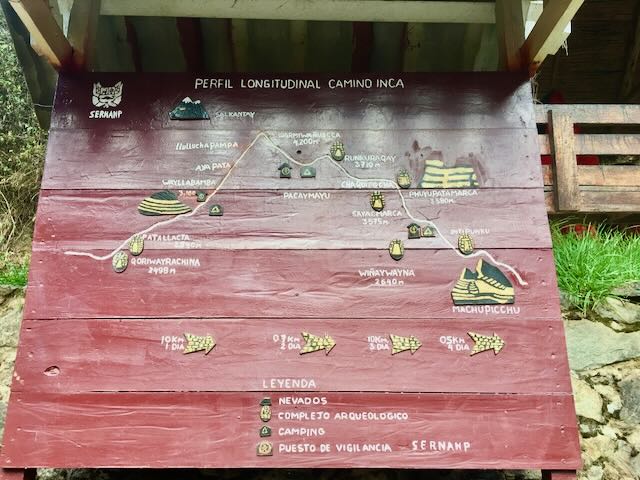
The journey to Machu Picchu was almost as good as the destination as we walked in the (tiny) steps of the Incas along paths and past many archaeological sites along the way. The company we used only managed to secure 2 tourist passes for the day in May we departed (the government restricts tourist passes to 200 per day). This meant we had our guide Americo all to ourselves and often the track and historic sites as well. We learn that our porters and guide came from rural, Quechua-speaking indigenous communities such as Ollantaytambo, Lares, and Patacancha. Most workers on the Inca trail are direct cultural and genetic descendants of the indigenous peoples who populated this region during the Inca Empire. For many, Quechua is their first language, and seasonal work on the trail helps supplement their traditional subsistence farming. Tour guides, interestingly, require formal university degrees in tourism or archaeology and official government certification.


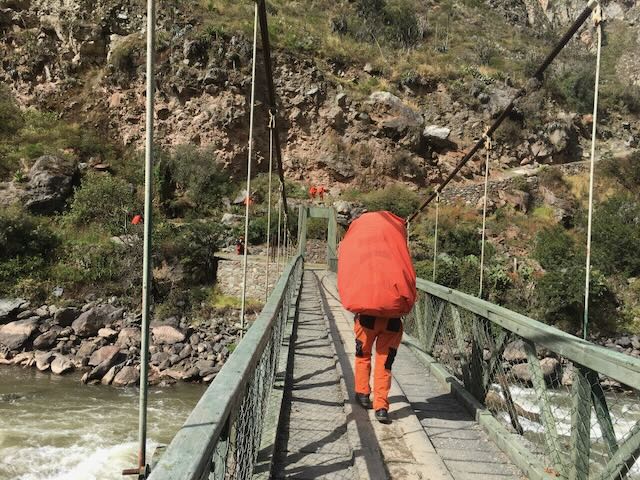
After a bus ride to Ollantaytambo, where the trek starts, we met our group of 4 porters, 1 cook and guide and started off on the first days gentle 4-5 hour walk up to the first night’s campsite at Ayapata (3300 meters). Our guide, Americo, paused to show us the wild orchids, and the different plants and animals the Incas used for medicine, food and decorations. The porters ploughed on ahead in order to set up a lunch tent and cook us lunch – which they did every day.


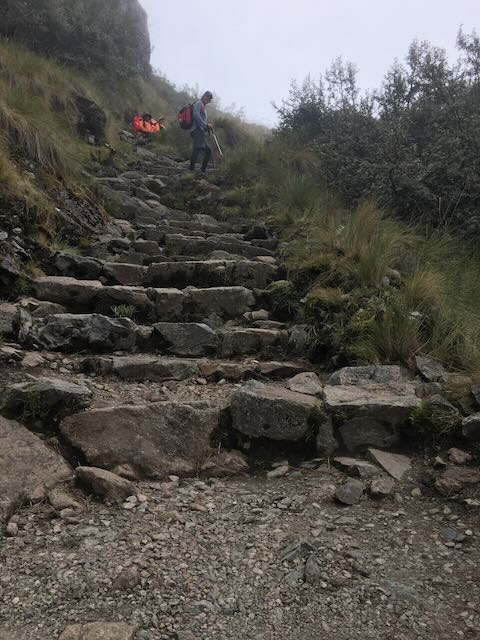
We walked on narrow tracks and up tiny stone steps. The Incas are small people with even smaller feet – half the size of my size 40 foot. I could only fit my toes on the steps, which meant I didn’t have much purchase when climbing up or down steep cliffsides. I was glad that for the assistance and stability of the compulsory hiking poles. We arrived at our first campsite as the sun was going down on day one and marvelled at the delicious food the cook prepared and how well our tent had been set up by the porters. we felt very well looked after by the whole crew. It is amazing how much gear you need to feed and house 8 people (of which only 2 of us were guests) and these 4 small but incredibly fit men carried it all over 4 days – just for us!


Day two was grueling with a very slow walk up to Dead Woman’s Pass (4215 meters). This pass is named as the mountain’s crests form the shape of a reclining woman’s body when viewed from the valley below. The traditional Quechua name is Warmiwañusqa, which literally translates to “dead woman” (warmi meaning woman, and wañusqa meaning dead). There is no history of anyone (man or woman) dying on this pass but you certainly feel like you might by the time you reach the top! After peaking at the Pass we headed down in to Pacaymayu Valley for a well deserved lunch stop. Then we headed up to the second pass of the trek to stop at a small Inca site (Runcu Raccay) and then the magnificent Inca site, Sayacmarca (an otherwise inaccessible village).


The 3rd day we encountered a whole new part of the Inca Trail with vegetation that was more jungle like, snow capped mountains, lots of Inca ruins, rivers and waterfalls. Such contrasts and at once stage we stepped between a narrow gap in the rocks and came out into a mossy damp fern valley. We had one he last peak to climb – Phuyupatamarka (3600 meters) before reaching our last camp site for the trip in the early afternoon. We had an early dinner, played cards in the tent with our guide then were advised to try and get some sleep as we would be woken up at 3am to start our trek into the sun gate for sunrise.


We saw many Inca Ruins on the trek and were delighted to see Llamas grazing on the terraces. Llamas were introduced by the Incas as beasts of burden to carry things up and down the steep hills but are now left to foam free with their only job to keep the grass down on the sacred sites. One of our favourite old Inca ruins was the Sayacmarca ruins which were thought to be a village that housed people that worked at Machu Picchu.

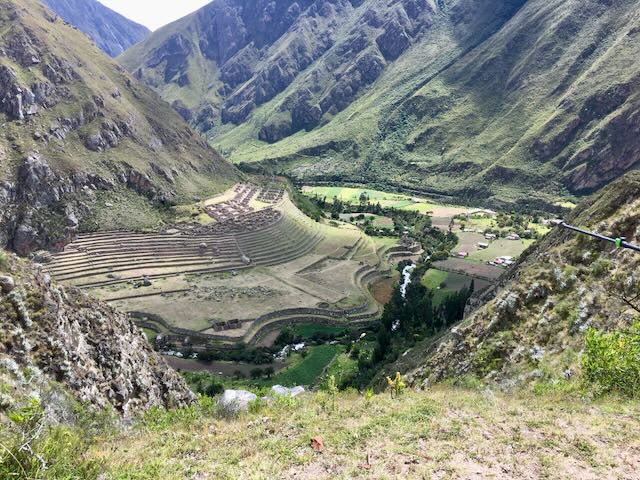

Our last day was disorientating and magnificent. We were woken at 3am – as promised- with a cup of hot tea and a piece of fruit. we put on our head torches and began the walk up to the entrance to Machu Picchu and the sun gate. We joined in with the other guided groups who had been on the trail with us (but had hardly seen). It was a shock to be amongst so many people. We had to show paperwork at the sun gate entrance then we all milled about on the steps waiting for the sun to rise over the mountains and reveal Machu Picchu to us. It was worth the wait – and the 4 day hike!


After a few hours wandering around the incredible structures of Machu Picchu, and watching it slowly fill up with tourists, we made our way down to the Machu Picchu train station with our guide Americo where we shouted him lunch and relived our marvellous journey together. We all caught the glass topped train back to Ollantaytambo then a bus back to Cuscao. It was the longest but most rewarding day and our heartys and heads were so full of all we had seen and done we could barely stay awake long enough for our last delicious meal in Cusco.


Machu Picchu – Inca Trail Tips and Curiosities
- The Inca recorded data using khipus (colorful knotted strings) dates, debts, population etc
- The Incas transported everything on foot or with llamas
- Fast-moving messengers called chasquis ran across the empire in pairs, passing messages over huge distances at rates up to 150 miles (241 km) a day.
- Security lookouts would keep watch at strategic points and warn Machu Picchu of dangers using smoke signals passed along the valley
- The network of trails that connected the Inca Empire are 25,000 kilometres long
- The Inca were the first to cultivate potatoes, eventually growing over 3,000 different varieties in the Andes
- The Spanish conquistadors never found Machu Picchu or its classic approach trail, leaving the site unknown to the outside world until explorer Hiram Bingham arrived in 1911.
- Preparing for the Inca Trail Trek
- Book 6 – 12 months ahead to do the Inca trail
- Allow at least three days to adjust to the altitude in Cusco
- Avoid alcohol or large meals on the days before you go
- Be warned there are no toilets on the track and only 1 rudimentary drop loo at lunch stops and night camps.
- Be prepared incase you need to go on the track (it is VERY hard to pull off into bushes so you will be exposed) with toilet tissue and zip lock bags to carry it out with you.
- Carry Hand sanitiser and hand/face wipes as no running water (although porters provide a wash up bowl each night)
- Carry cash for tipping porters and small purchases at villages at start of trail
- Take a sun hat for day and a beanie at night (it gets very cold)
- Make sure you have good hiking shoes/boots that are work in and fit well (or lose 4 toe nails as my husband did from his new hiking shoes)
- Learn from the Inca people how to live harmoniously with the land
- Listen to your guide who will share amazing stories with you
- Be prepared to walk sideways on steps unless you have a shoe size below a 5/ 35
- Carry poles for balance no matter how fit or young you are as there are seriously steep rocky parts on the trail
- Chew coca leaves and drink coca leaf tea whenever you can for energy and to deal with altitude (and reduce the need for the toilet!).
- Take lozenges to suck for energy as you hike.
